LTIMindtree's (LTIM's) December quarter revenue, at $1.139 billion, was up 1.8 per cent quarter-on-quarter (Q-o-Q) (5.6 per cent year-on-year or Y-o-Y) in constant currency (CC) terms, marginally ahead of expectations.

'Employers increasingly want candidates who can take AI pilots from proof-of-concept to production-ready systems.' 'That requires governance, monitoring, and ROI measurement -- skills that go beyond coding and into business impact.'

GST, net of refunds, now yields close to 20 trillion to both the Centre's and states' exchequer.

Eveready Industries India will launch a new category in Financial Year 2024-25 (FY25) as it works to double revenue, said a senior executive of the country's largest dry cell battery maker. It could be an adjacency or a new product under the Eveready brand and a final decision is expected by the end of this financial year. "We are currently working on that exercise; it's on the drawing board," said Suvamoy Saha, managing director of Eveready.

As the potential threat of a steep 200 per cent tariff on pharmaceutical imports hangs in the air, analysts and industry insiders feel that focus on exports to non-US regions as well as domestic market will increase as a long-term trend. US President Donald Trump told CNBC's Squawk Box in the first week of August that planned tariffs on import of pharmaceutical products to the US could eventually reach up to 250 per cent.

ITC highlighted that legal cigarettes account for 9 per cent of tobacco consumption in India, but 80 per cent of tax collection is from tobacco products. While illicit cigarettes account for roughly one-third of the market share, legal cigarette volumes have recovered to around 96 per cent of peak FY13 volumes, after dipping to 70 per cent in FY21.

For food aggregator platform Swiggy, quick commerce (qcom) is proving to be a better growth opportunity than food delivery. Its qcom arm Instamart is rapidly outpacing its core food delivery vertical across several key financial metrics, the company's recently filed draft red herring prospectus (DRHP) shows.

After four years of high double-digit growth in profits, corporate earnings of Indian companies hit a speed bump in the April-June quarter of 2024 (Q1FY25), leading to the risk of a downward revision in India Inc profit estimates for FY25 and volatility in the equity market. Earnings growth slowed despite companies in most non-financial sectors reporting higher operating margins from lower commodity prices and a decline in interest costs.

After a quiet April-June quarter in 2024-25 (FY25), the operational and financial performance of India's largest listed hotel company, Indian Hotels Company, clearly rebounded in the July-September quarter (Q2) of FY25. With double-digit growth in the average room rate (ARR) and higher occupancy, the Taj Hotels chain owner reported a 16 per cent revenue increase and a 30 per cent rise in operating profit.
Tata Consultancy Services (TCS) - the largest information technology (IT) services provider in India and the second-largest globally - recently set an ambitious goal of $50 billion in revenue by 2030. The growth required to reach this goal, however, is lower than the company's own standards. In the past decade, TCS revenues, or net sales in US dollar terms, have grown at a compound annual growth rate (CAGR) of 9.5 per cent, from $10.2 in 2011-12, to an expected $25.3 billion during 2021-22 (FY22), based on its revenue trend in the first nine months of FY22.
There has been a sharp recovery in the headline corporate earnings in the April-June 2023 quarter (Q1FY24), after a dismal showing by early bird companies. The combined net profit of the 983 listed companies that have declared their quarterly results, so far, was up 64.7 per cent year-on-year to record a high of Rs 2.68 trillion in the first quarter, but growth in earnings remained lopsided because most of the incremental gains came from a handful of companies. Moreover, the quarterly numbers showed a continued slowdown in revenue growth.

Daily essentials and food products will be cheaper from Monday, as leading FMCG companies have slashed prices, extending GST cut benefits to consumers.

'There is no immediate threat to the government, and they would prefer the growth agenda.'

IT company Wipro on Thursday reported a 21.2 per cent increase in its consolidated net profit to Rs 3,208.8 crore for the second quarter of FY25. It had reported a profit of Rs 2,646.3 crore in the year-ago period. The revenue from operations for the reporting quarter was Rs 22,301.6 crore, a 0.95 per cent decline from Rs 22,515.9 crore in Q2 FY24.

Info Edge (India) topped expectations in its October-December quarter (Q3) results, posting strong revenue and profit growth. Its shares have rallied as much as 6.14 per cent in two days. The technology holding company's revenue rose 15.2 per cent year-on-year (Y-o-Y) to Rs 722.3 crore, driven by robust performance across its key verticals, particularly its recruitment business.

India's top IT companies have shown a hiatus between their performance on the bourses in the pandemic period and earnings growth. The combined market cap of the top five IT companies - Tata Consultancy Services, Infosys, Wipro, HCL Technologies, and Tech Mahindra - is up 87 per cent since the end of March 2020. In comparison, the benchmark BSE Sensex is up 68 per cent during the period. So the industry beat the broader market by a big margin in the last one year.

'We realised that partnering with a strong local player like the JSW Group would create far greater value than going it alone.'

India's economic growth slowed to near two-year low of 5.4 per cent in the July-September quarter of this fiscal due to poor performance of manufacturing and mining sectors, but the country continued to remain the fastest-growing large economy, data showed on Friday. The gross domestic product (GDP) had expanded by 8.1 per cent in the July-September quarter of 2023-24 fiscal. The previous low level of GDP growth at 4.3 per cent was recorded in the third quarter (October-December 2022) of financial year 2022-23.

Siemens's share price has lost ground in the past few sessions following weak management commentary. The management indicated challenges to the growth outlook due to stagnant private capex and concerns over semiconductor shortages for digital industries. Government infra-spending may regain momentum from January 2025.

After a record run in FY2022, when the brokerage industry is set to report over 30 per cent topline growth at around Rs 28,000 crore, the industry is set for a tepid growth next fiscal even though the outlook is stable, says a rating agency report. The market has been on a song since June 2020 when the first wave of the pandemic ebbed and since then it has had record run with the stock indices more than doubling since the Covid-19 mayhem in March 2020 and scaled new life-time highs since then. The market frenzy was also visible in the massive number of new investors coming to the equity market, as exemplified in the more than trebling of the demat accounts since April 2020.
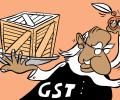
It is now becoming increasingly clear that rising imports have played a significant role in sustaining the buoyancy in revenues from GST, notes A K Bhattacharya.

FMCG major Hindustan Unilever Ltd (HUL) on Thursday reported a decline of 3.35 per cent in its consolidated net profit at Rs 2,475 crore for the fourth quarter ended March 31, 2025.

Telecom operator Bharti Airtel posted about a five-fold jump in consolidated net profit to Rs 11,022 crore in the March 2025 quarter, mainly due to the tariff hike impact and one-time gain on tax benefits. Bharti Airtel had posted net profit (attributable to owners of the parent company) of Rs 2,071.6 crore a year ago.

Anna Leigh Waters became the first athlete from her sport to attend the ESPY Awards

Voltas saw strong growth in both UCP (Unitary Cooling product) and EMPS (electro mechanical projects) segments.

From its recent lows, the stock of consumer major Marico is up 7 per cent on the back of a better-than-expected June quarter performance and robust outlook. In a pre-quarter update, the management indicated that domestic volume growth should witness an improvement in FY25, while other segments (growth portfolio, international business) too would see traction going ahead. The near-term trigger is strong sales and operating performance for Q1FY25.

The life and non-life insurance industries are hopeful of a reduction in the goods and services tax (GST) on health and life insurance premiums, after Prime Minister Narendra Modi, in his speech on Friday, announced GST relaxations aimed at providing relief to ordinary citizens, farmers, the middle class, and the small and medium enterprises (MSME) sector.
IT services major HCL Technologies (HCLTech) on Monday reported a 10.51 per cent increase in consolidated net profit to Rs 4,235 crore in July-September quarter of FY25, as the company raised the lower band of its growth guidance on the back of better-than-expected performance. The Noida-headquartered firm had posted a net profit of Rs 3,832 crore in the year-ago period. HCLTech increased the lower band of its revenue growth guidance to 3.5-5 per cent year-on-year in constant currency, against a guidance of 3-5 per cent in the first quarter.
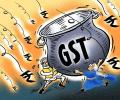
Gross GST collection in March grew 9.9 per cent to over Rs 1.96 lakh crore, government data showed on Tuesday.

Operating margins have been the primary driver of corporate earnings in India in recent quarters, despite revenue growth suffering from weak consumer demand. Companies across sectors have reported a sharp improvement in earnings before interest, tax, depreciation, and amortisation (Ebitda) margins over the past two years, benefiting from lower commodity and energy prices. Higher margins more than compensated for slower revenue growth, resulting in double-digit growth in net profit for five consecutive quarters.

Key benchmark indices Sensex and Nifty declined for the third session in a row on Friday, dropping nearly 1 per cent, dragged by heavy selling in IT, auto and energy stocks. Tariff-related uncertainties amid mixed global market trends also added to the pressure, analysts said. The 30-share BSE Sensex tanked 689.81 points or 0.83 per cent to settle at 82,500.47.

Mamaearth Co-Founder Ghazal Alagh warns entrepreneurs against three common pieces of startup advice, calling them traps that hinder speed, stifle innovation, and limit real growth opportunities.

'Expect our food delivery business to deliver sustainable adjusted EBITDA margins of about 5 per cent in the medium term.'

The Indian government has introduced a bill in the Lok Sabha to ban online games played with money, aiming to curb addiction, money laundering, and financial fraud. The bill also targets advertisements and financial transactions related to such games.

Gland Pharma beat muted expectations for Q2FY25. There was increased Ebitda (Earnings before interest, taxes, depreciation and amortisation) loss at Cenexi, the CRAM subsidiary. However, overall Ebitda margin was better than expectations at 21.1 per cent. But given two years of earnings decline in FY23 and FY24, the business may have bottomed and upper-teens EPS (earnings per share) growth looks possible over next two financial years.

If the protected growth in GST revenue is reduced to 10 per cent, the Centre would save more than Rs 25,000 crore in 2020-21 if none of the states show any revenue growth. This would nearly amount to 0.1 per cent of the gross fiscal deficit and help the government in avoiding fiscal slippage to some extent in subsequent years.

The 31st meeting of the Goods and Services Tax (GST) Council, held in December 2018, deferred a decision to reduce the GST rate for cement from 28 per cent to 18 per cent. This was despite recognising that cement - along with automobile parts - remained among the few mass-consumption items still taxed at the highest slab, which was originally meant for luxury and sin goods.

The fast-moving consumer goods (FMCG) sector is likely to report muted results in the fourth quarter of 2024-25 (Q4FY25) due to weakness in urban consumption. The weakness may persist through the first half of 2025-26 (H1FY26).

The first quarter results (Q1FY25) of Indian IT services hint towards better fiscal growth than the preceding year, but as the management commentary said, "there is still some time for the industry to be firing on all cylinders." Among the majors-Tata Consultancy Services (TCS), Infosys, HCLTech, and Wipro-it is the Bengaluru-based Infosys that has performed better, which was also evident in its full-year revenue guidance.

The mutual fund industry's QAAUM (Quarterly Average Assets Under Management) was up 37 per cent year-on-year (Y-o-Y) (9 per cent Q-o-Q) to hit Rs 59 trillion (end Q1FY25). The equity segment grew 55 per cent Y-o-Y and equity formed 56 per cent of total AUM, up 49 per cent in Q1FY24. Sequentially, AUM grew by Rs 5 trillion.
